
Proportionally Shrinking Down Search Hits for Review
Case law summary on search term dispute analyzing the proportionality and undue burden on tens of thousands of keyword hits.



Discovery disputes over search terms and the number of hits to review are a universal constant in courtrooms across the country. Luckily, U.S. Magistrate Judges across the country have plenty of experience deciding these cases when cooperation fails, and motions to compel are filed.
The Search Term Dispute
The number “42” might be the meaning of life, but 42 search terms is arduous. In Abraham v. United States Auto. Ass'n, the plaintiffs proposed 42 search terms for 16 custodians. Abraham v. United States Auto. Ass'n, No. 5:24-cv-01182-FMO-SPx, 2026 U.S. Dist. LEXIS 35480, at *5 (C.D. Cal. Feb. 20, 2026). Over a protracted meet-and-confer process that lasted months, the litigants exchanged counterproposals on search terms and hit counts.
The parties agreed to compromise on some search terms and custodians. However, they failed to reach an agreement on three searches and sub-searches. The disputed searches were Boolean queries using “AND” and “OR” connectors to expand or limit searches. Abraham, at *5-7.
Here are the three disputed search terms:
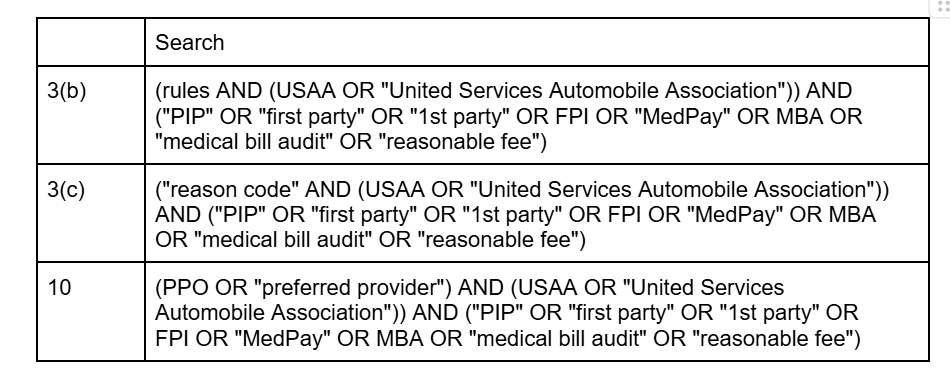
The defendants proposed counter-searches with Boolean logic to restrict results by requiring either: (1) that the document contain either "California" or "CA" at least once ("CA Restrictor"); or (2) contain the terms "USAA" or "United States Automobile Association" at least twice ("USAA Restrictor"). Abraham, at *7-8.
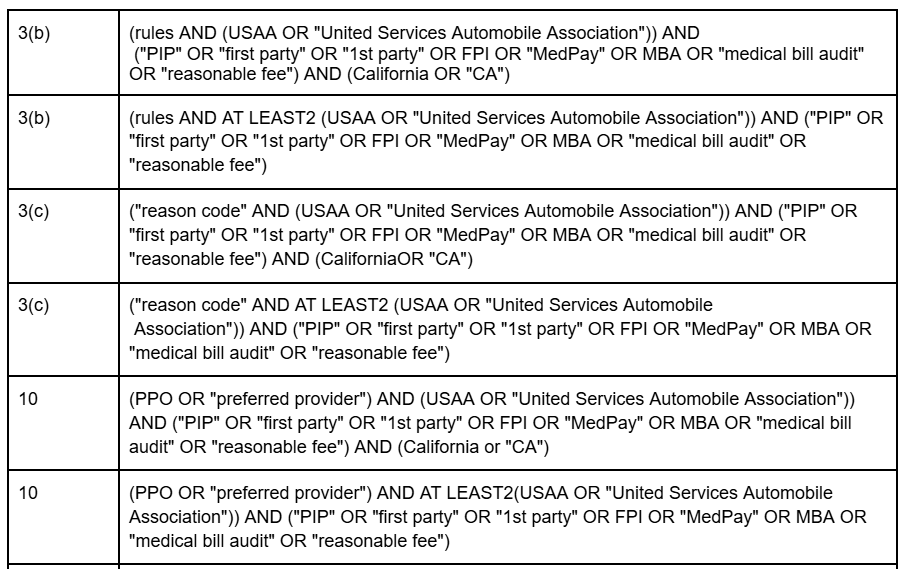
Abraham, at *7-8.
The defendants provided search term hit reports to further their proportionality arguments of the plaintiffs’ search terms.
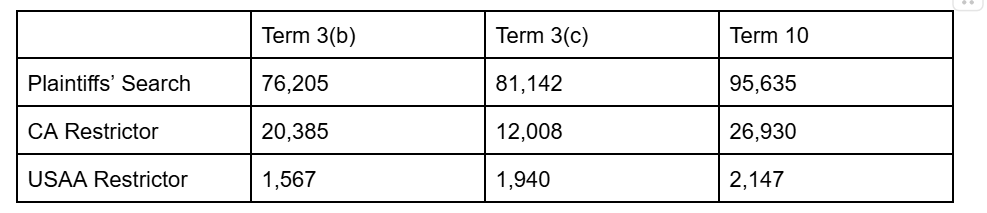
Abraham, at *8.
The conflict did not end here. The parties continued to negotiate search terms, with another round of proposed refinements focused on eliminating references to seven other states, requiring the name of the individual PPO network at issue in the lawsuit, and adding other limiting terms. Abraham, at *9.
The plaintiffs sought a sample of 1,000 records to evaluate whether the limiting searches were overly exclusive of relevant ESI. Abraham, at *10-11.
Despite progress in the meet-and-confer process, the parties were unable to resolve all their disputes over search terms.
Balancing Relevancy and Burden
U.S. Magistrate Judge Sheri Pym held that the plaintiffs’ search terms were both relevant and proportional to the needs of the lawsuit, but that the plaintiffs needed a restrictor to reduce the burden on the defendants of reviewing 100,000 additional records. Abraham, at *17-18.
Proportionality arguments require factual support for a judge to decide if there is an undue burden. In this case, the defendants said the unrestricted search terms would add another 100,000 documents to review and require 1,000 attorney hours. Id. While the hourly rate is not stated, assuming associate attorneys are billing $150 an hour, that would increase costs by $150,000.
Judge Pym balanced the undue burden issue by requiring the use of restrictive terms for states not relevant to the case, but not a limiter for California, to reduce the number of search hits for the defendants to review. Abraham, at *22.
The court added a quality assurance measure to the order, requiring the defendants to produce a random sample of 500 documents that were excluded by the additional limiting terms. Id. This would allow the requesting party to review the effectiveness of the limiting terms on whether relevant records were inadvertently excluded. Id.
Logikcull Insight
Negotiating search terms can be an exhausting process. No requesting party wants to have terms that exclude relevant documents from production; no producing party wants to slog through irrelevant records in document review. Finding the right balance takes art and diplomacy. Search term hit reports help identify the number of records, but they don’t speak to the content within the records.
Logikcull now has ASK, which incorporates Gen AI search technology into searches. ASK can change the starting point for developing search terms. Lawyers frequently know the big questions to ask for who, what, when, where, how, and why. However, translating those questions into Boolean or proximity searches is easier said than done.
ASK can serve as a starting point for lawyers preparing for a meet-and-confer on search terms. Most people do not think in terms of Boolean logic for a search like (report AND (USAF OR "Air Force")) AND ("UFO" OR "Unidentified Flying Object"). However, people do think in terms of “Does the Air Force have any UFO reports?”
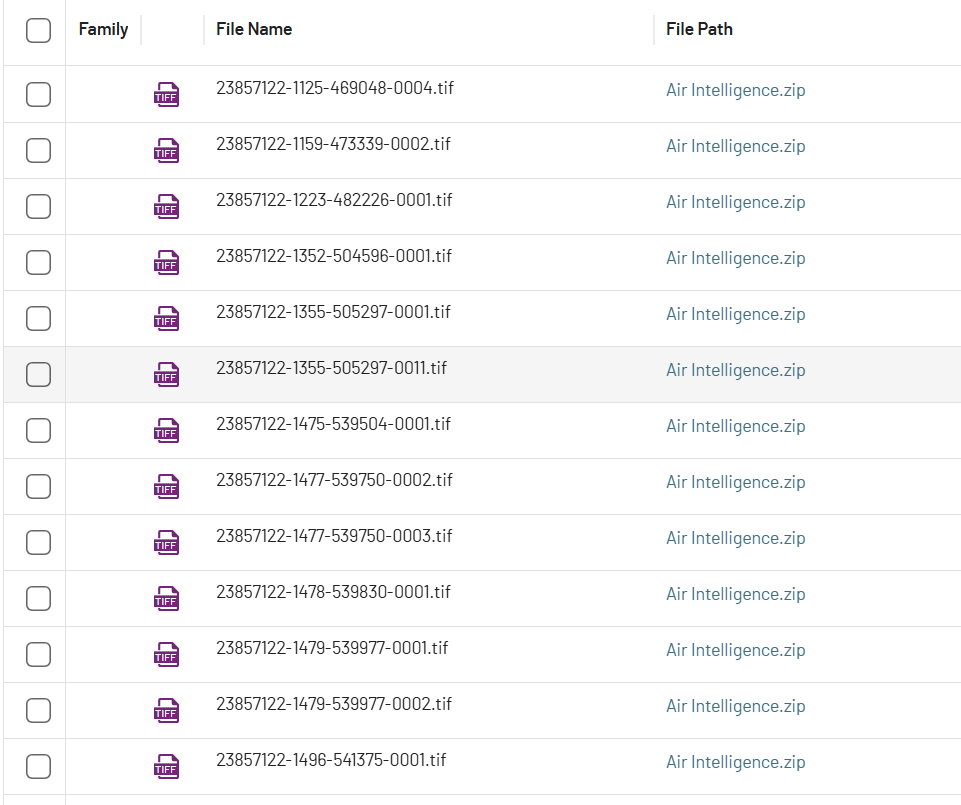
Let’s use Logikcull ASK to search for UFO documents produced by the US Government using the above terms and to ask the basic question.
Search terms in Logikcull:
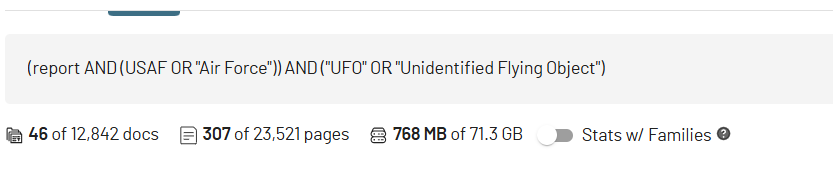
The Boolean search had forty six records for review with hits.
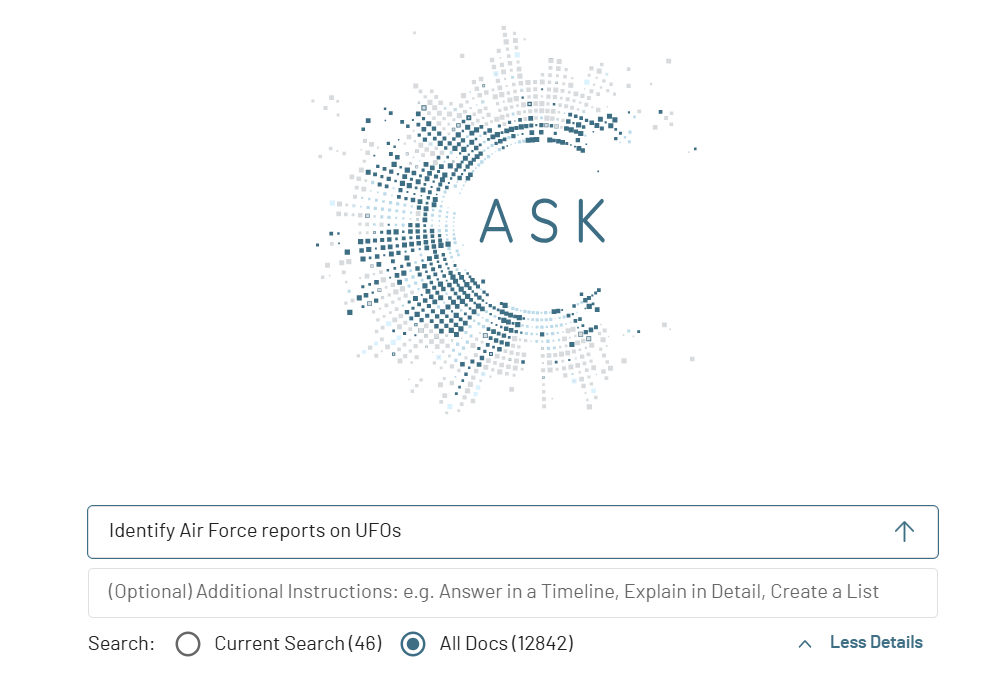
Search in Logikcull with ASK
A simple prompt: "Identify Air Force reports of UFOs,” then ASK will scan your document set for relevant data.
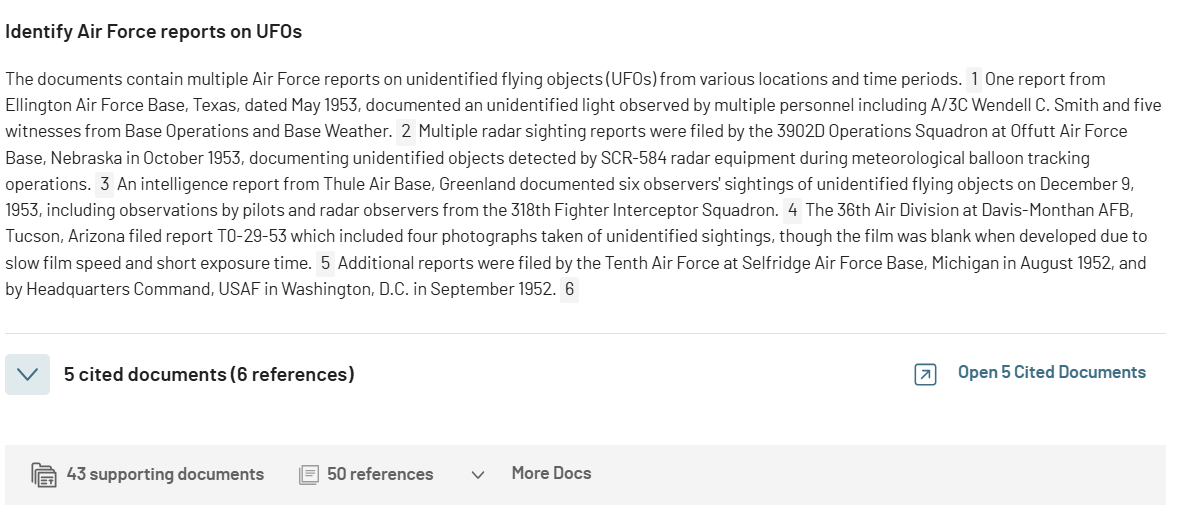
The question in ASK identified 43 supporting documents with 50 references. Summaries of the records are available for the reviewing attorney.
There is no such thing as a one-and-done search. There is always refinement. One way to refine keyword searches is to prompt ASK to identify common search terms in hits. The terms identified by ASK could then be used in a meet-and-confer regarding prospective keywords.

Prospective keywords identified by ASK can then be used in Boolean searches to continue to verify the effectiveness of different search strategies.
Searching for Proportionality and Reasonableness
There is no magic wand for identifying ESI that is responsive to discovery requests. Developing search strategies should be guided by the principles of reasonableness and proportionality. The question is how.
We are excited by the promise that Gen AI holds to make meet-and-confers over search terms more effective. It is easier for a lawyer to say what they ultimately want than how to search for it. ASK in Logikcull can help make asking the basic questions of who, what, where, when, how, and why easier in discovery. The insights from ASK can help attorneys refine search methodologies, strategically review hits, and focus on the merits of a lawsuit.
Learning With Logikcull
Browse our latest resources for innovative legal teams like yours




Stay in the know
Get the latest news, expert guidance, and interviews delivered straight to your inbox so you're always one step ahead.
Get the latest updates
Want to see it work?
Request a demo today.
Managing FOIA requests with limited staff, strict deadlines, and pressure to protect sensitive data?
Logikcull is built for this.