Logikcull for Public Records: A Practical Series for Faster Records Response
Public records requests stacking up? Join our live series and watch Logikcull handle intake, collection, review, and disclosure, with Q&A after every demo.


What you'll learn:
Public records work spans multiple stages, from receiving and tracking requests to collecting responsive information, reviewing and redacting sensitive content, and ultimately producing records for disclosure.
In this webinar series, the Logikcull team will walk through each major stage of the public records workflow and demonstrate how Logikcull for Public Records helps agencies manage the process more efficiently from intake to disclosure.
Across the series, you’ll see how Logikcull can help teams reduce manual work, eliminate disconnected processes, find responsive information faster, protect sensitive data, and keep requests moving with greater visibility and control.
Each session will focus on a different part of the workflow and include a live product demonstration followed by Q&A with the team.
Upcoming Events
The Logikcull Intake Portal: How to Receive, Assign and Track Requests | Episode 1
A Logikcull Webinar, October 27, 6:00 PM — 6:30 PM CEST
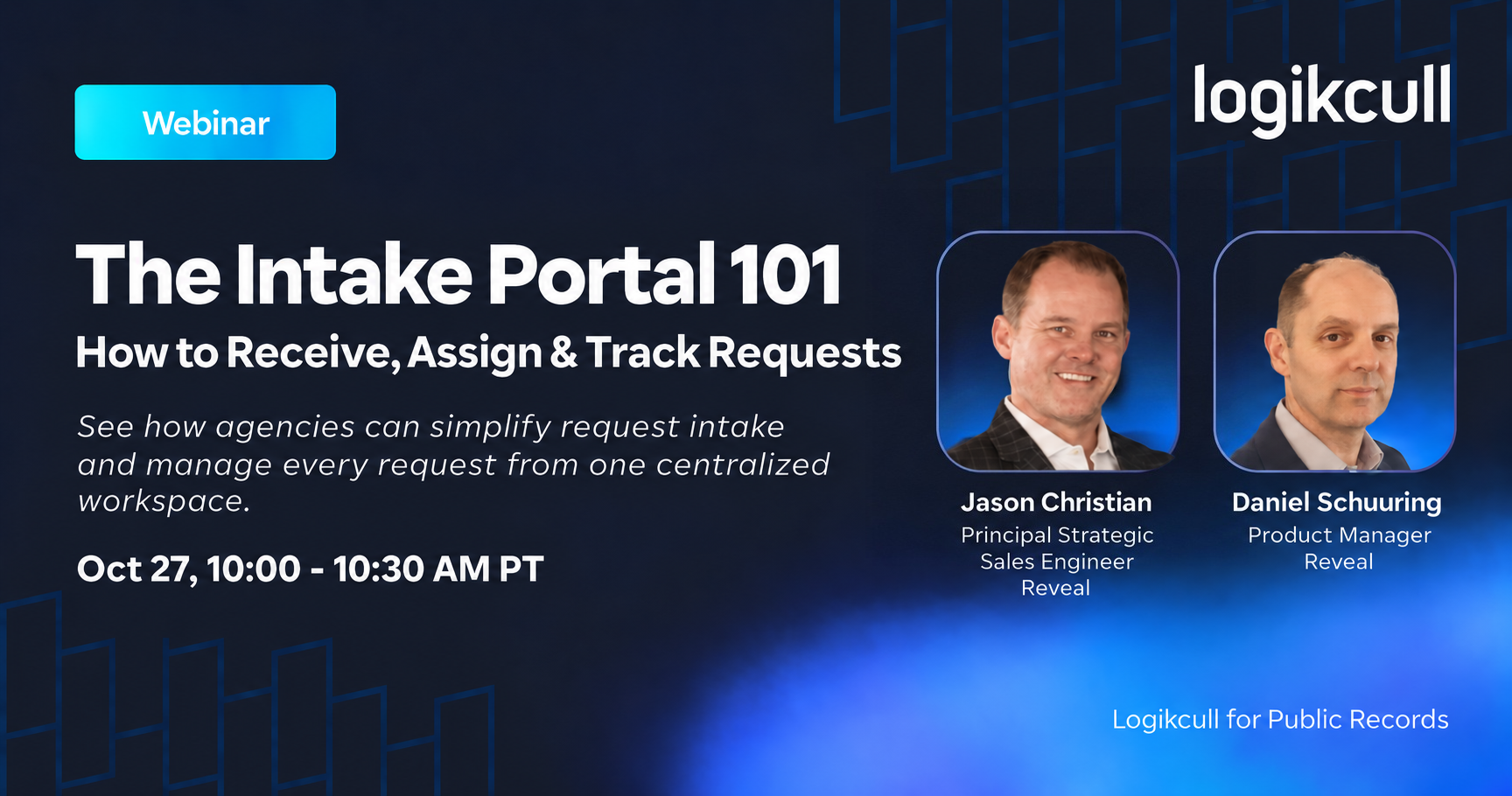
Public records response starts long before review. How requests are submitted, routed, assigned, tracked, and communicated can determine how efficiently everything downstream moves.
Join us for a live look at Logikcull for Public Records and see how agencies can simplify request intake and manage every request from one centralized workspace.
You'll learn how to:
- Give requesters an easy-to-use public submission portal
- Customize request forms to capture the right information upfront
- Route and assign requests to the right people
- Track deadlines, status, ownership, and internal notes
- Manage requester communications and status updates in one place
From Collection to Clarity: Collect, Cull & Find Responsive Records | Episode 2
A Logikcull Webinar, November 10, 7:00 PM — 7:30 PM CEST
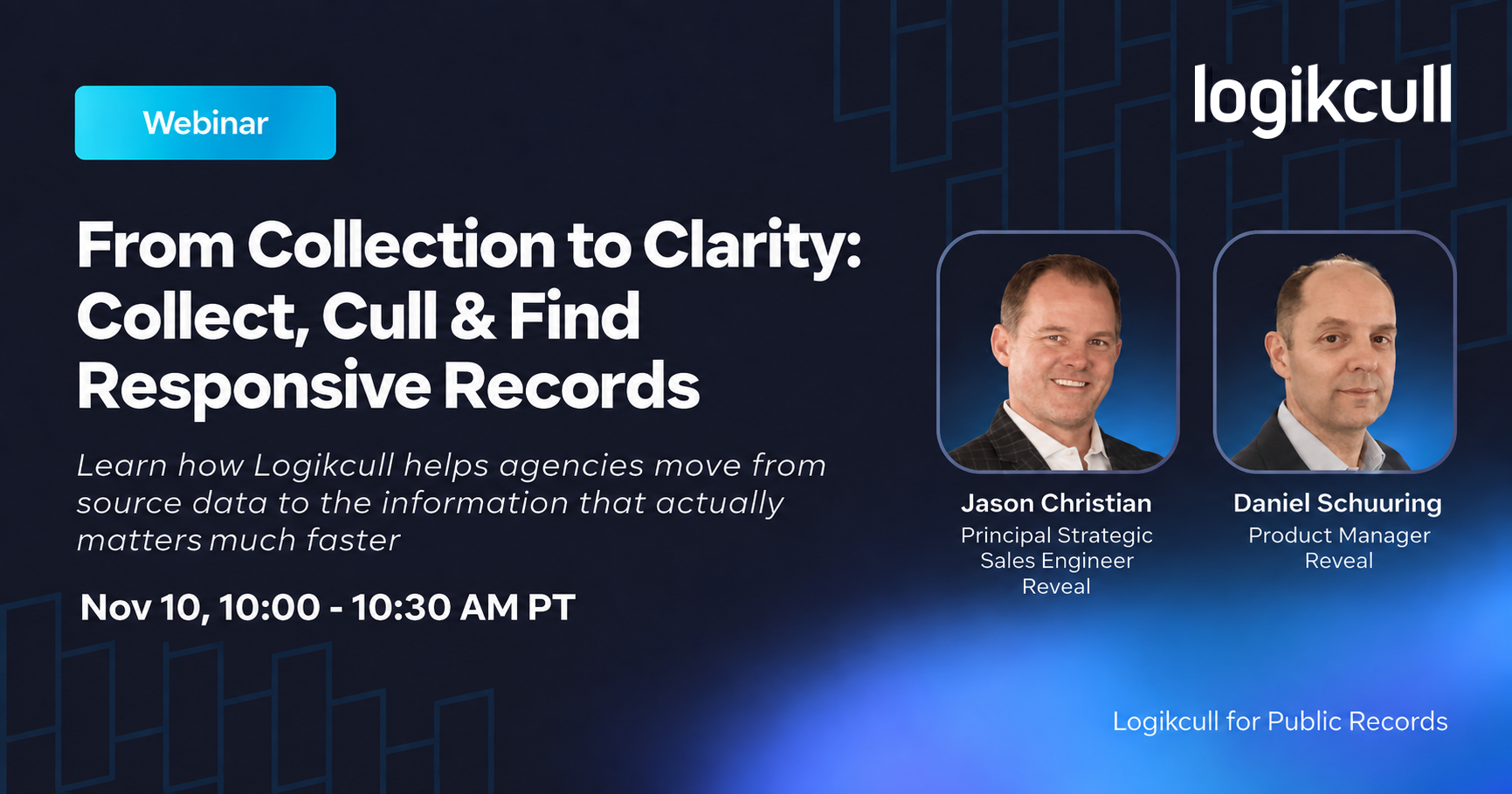
Finding responsive records shouldn’t mean reviewing every single document you collect.
Join us for a live demonstration of how Logikcull for Public Records helps agencies move from source data to the information that actually matters faster.
You'll learn how to:
- Collect records from common data sources or upload existing datasets
- Automatically process and organize collected information
- Eliminate duplicates and reduce the volume requiring review
- Narrow records using metadata, dates, keywords, and advanced search
- Use AI-assisted search to surface potentially relevant information
- Move from large collections to a focused review set more efficiently
Moving Past the “Acrobatics”: Automating PII Detection, Redaction & QA | Episode 3
A Logikcull Webinar, November 17, 7:00 PM — 7:30 PM CEST
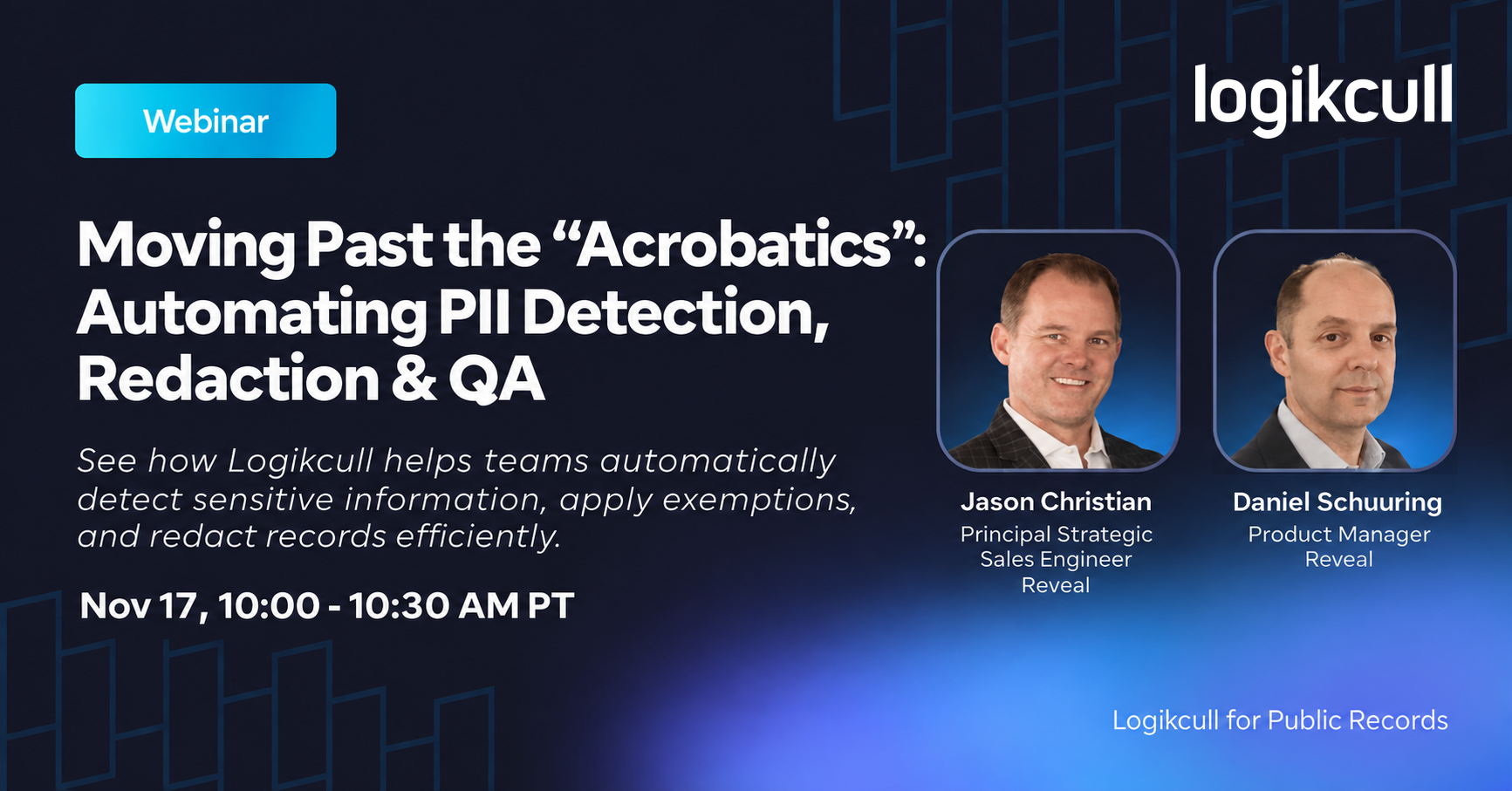
Protecting sensitive information is one of the most critical (and time-consuming) parts of responding to public records requests.
Join us for a live demonstration of how Logikcull for Public Records helps teams identify sensitive information, apply exemptions, and redact records efficiently while maintaining a defensible audit trail.
You'll learn how to:
- Automatically identify common types of personally identifiable information and build rules for custom redactions
- Apply redaction reasons and public records exemption codes
- Use bulk redaction to handle repetitive information efficiently
- Perform quality control before records leave your organization
- Maintain a clear record of redaction decisions and activity
- Redact sensitive content in audio files when needed
Closing the Loop: Production, Disclosure & the Public Reading Room | Episode 4
A Logikcull Webinar, December 8, 7:00 PM — 7:30 PM CEST
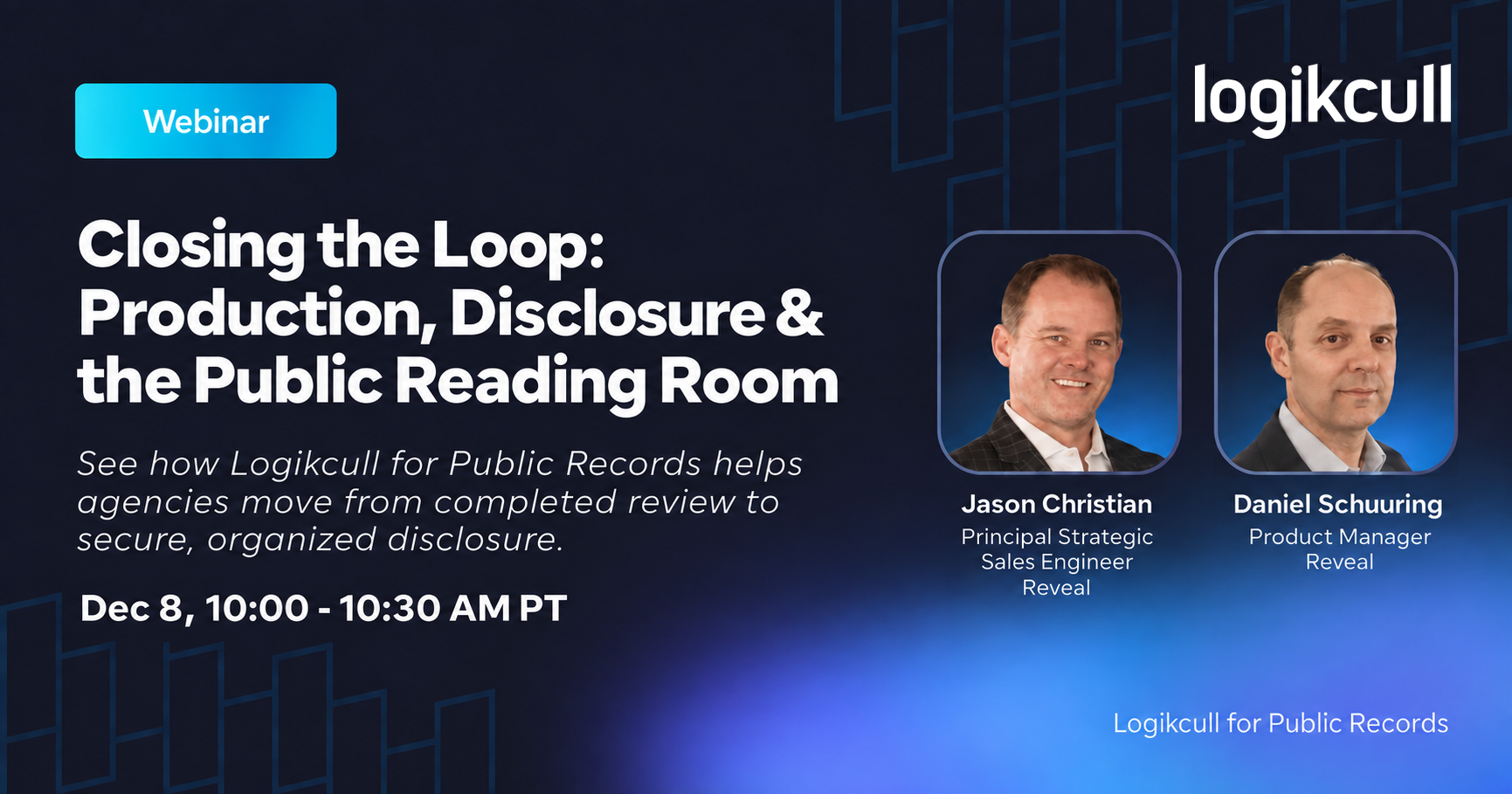
Once responsive records have been identified and reviewed, the final step should be straightforward; not another series of manual handoffs.
Join us for a live demonstration of how Logikcull for Public Records helps agencies move from completed review to secure, organized disclosure.
You'll see how Logikcull helps you:
- Apply consistent production settings across documents
- Connect completed productions back to the original request
- Deliver responsive records through the public records workflow
- Publish frequently requested information to a public reading room
- Keep requester communications and disclosure history together
For all the webinars on this series we'll conclude with a live Q&A, where you can ask questions and hear directly from the team behind the product.